• Blog
  • Shop
  • Podcast
  • Resources
  • About
  • Archive
  • Contact
  • Cart
  • Sign In My Account
Menu

The Gentleman Stationer

Vintage Living in the Modern World.
  • Blog
  • Shop
  • Podcast
  • Resources
  • About
  • Archive
  • Contact
  • Cart
  • Sign In My Account
Roterfaden Taschenbegleiters A5-A4

Pen and Stationery Shows are a great way to compare sizes and materials in person, and to learn how different systems work.

5 Considerations When Choosing a Notebook System (2026 Edition)

August 1, 2026

Next week is the D.C. Pen Show, and while I’ll be sharing table space with our friends at Vanness Pens, as we do every year, I’ll also be downstairs in the pen lounge hanging out and teaching, including my usual class on notebook systems. By “notebook system”, I’m referring to an organizational system that uses a cover to hold multiple notebooks, refills, and/or other accessories designed to work in combination. Brands that most people are familiar with include TRAVELER’S Company, Plotter, Roterfaden, Lochby, and others.

Typically when I teach this class I walk through the major types of systems and how each one works, along with some personal examples about how I’ve used different options over the years. Discussions can range from cover materials to bindings to refill sizes. I bring samples to pass around the room, and if you’ve been considering a specific brand, it’s a good way to get some hands-on experience before you make what can be an expensive purchase.

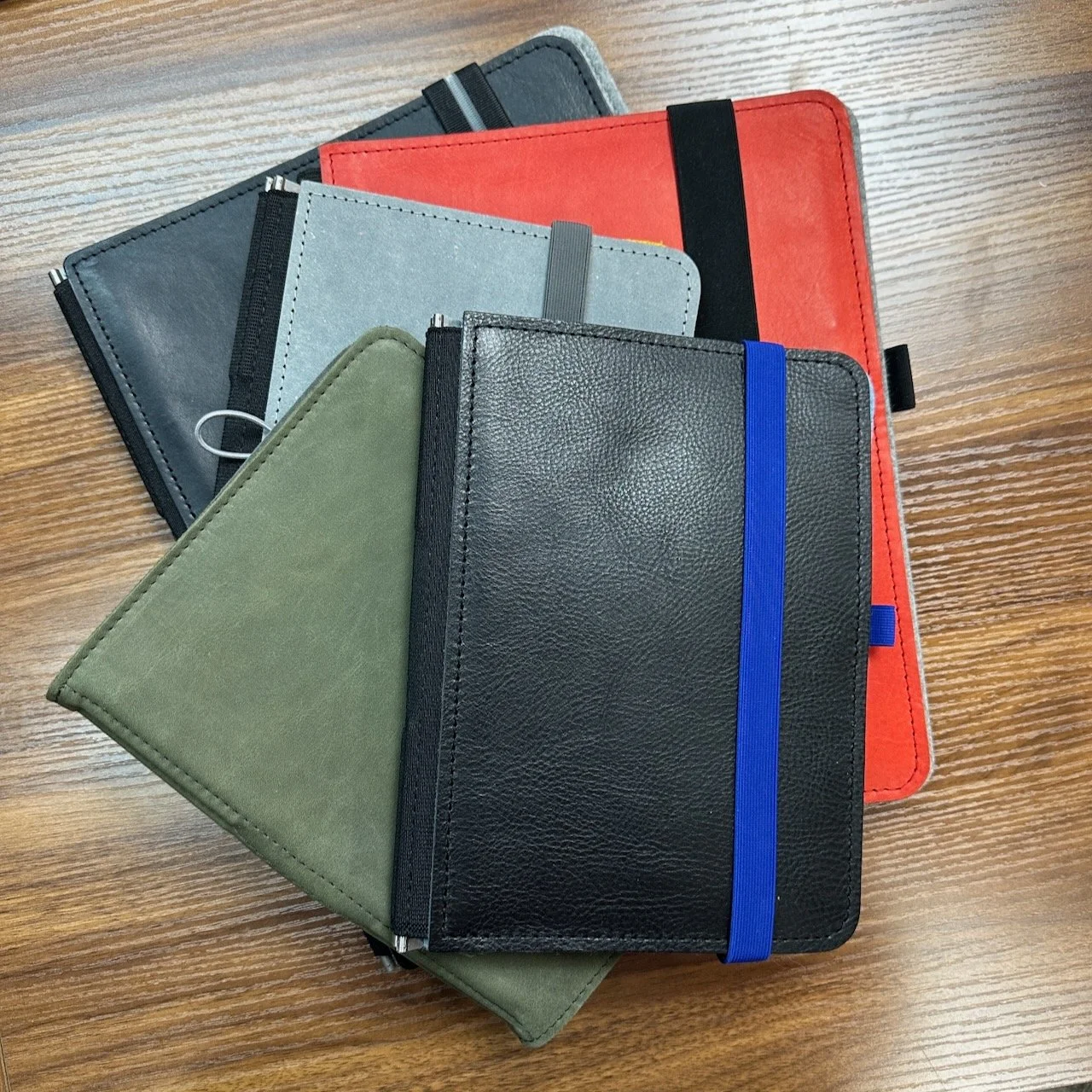
A few different brands that I may have on hand in D.C.

For those who can’t attend the class/seminar in person, please do check out the informational resources on Notebook Systems that we maintain on the site. As my own understanding of these systems evolves, and my own use changes, I also like to periodically offer my own thoughts and recommendations on how to get started. For 2026, here’s what I typically advise when people come to see me at a show or in the shop:

  1. Practicality over aesthetics. Choose a system based on your actual needs, not what you think your needs should be (or what social media tells you your needs should be). For me, there are lots of systems out there that I think look really cool, but which don’t align with how I work and organize information. The best notebook system is the one you will use, and that you won’t struggle with incorporating into your everyday life.

  2. Start slowly. Pick the one system you think will work best for you, and use it for a while to see if there are any holes in your workflow or organization. Add accessories as you need them, which helps to control costs. Try to avoid buying multiple new systems at once and testing them at the same time, as this prevents you from diving deep enough to understand how each system works.

  3. That said, don’t be afraid to eventually use more than one system. I personally use a combination of different notebook systems, because I’ve found that each fits better in a different area of my life. The key is to be intentional about how you add things.

  4. Universal sizing is almost always better than proprietary. Beware of companies that try to sell you an expensive cover where the only refill that fits is the notebook that company sells. If that company goes out of business, or you discover you don’t like the paper, you end up having to make your own refills or start over. Check measurements carefully and if at all possible choose standard A5 or B6 sizes or the slim equivalents of the same. Height is more important than width, especially with bound refills, because a notebook can usually be trimmed down to a narrower width, but cutting a notebook across the binding to make it shorter can cause it to fall apart.

  5. It doesn’t have to “look pretty.” My notebooks are not Instagram or Tiktok-ready, which is why you don’t see me post pictures of them all that often. If you enjoy doodling or decorating the margins and headers, by all means do that, but don’t feel intimidated into not trying a specific system because “I could never make look like so-and-so.” (Take it from someone who has followed the stationery influencer world behind the scenes for a very long time - many of those notebooks you see displayed on social media accounts never actually get used beyond layouts for social media posts.)

The Gentleman Stationer is supported by purchases from the T.G.S. Curated Shop and pledges via the T.G.S. Patreon Program. You can also come visit us at our physical stationery store in Nashville, Tennessee.

You aren’t going to find any stamps and stickers in my notebooks, which don’t make great content. :)
In Editorial, Notebook Review, Pen Shows Tags Notebook Systems, DC Pen Show 2026, Pen Show Prep
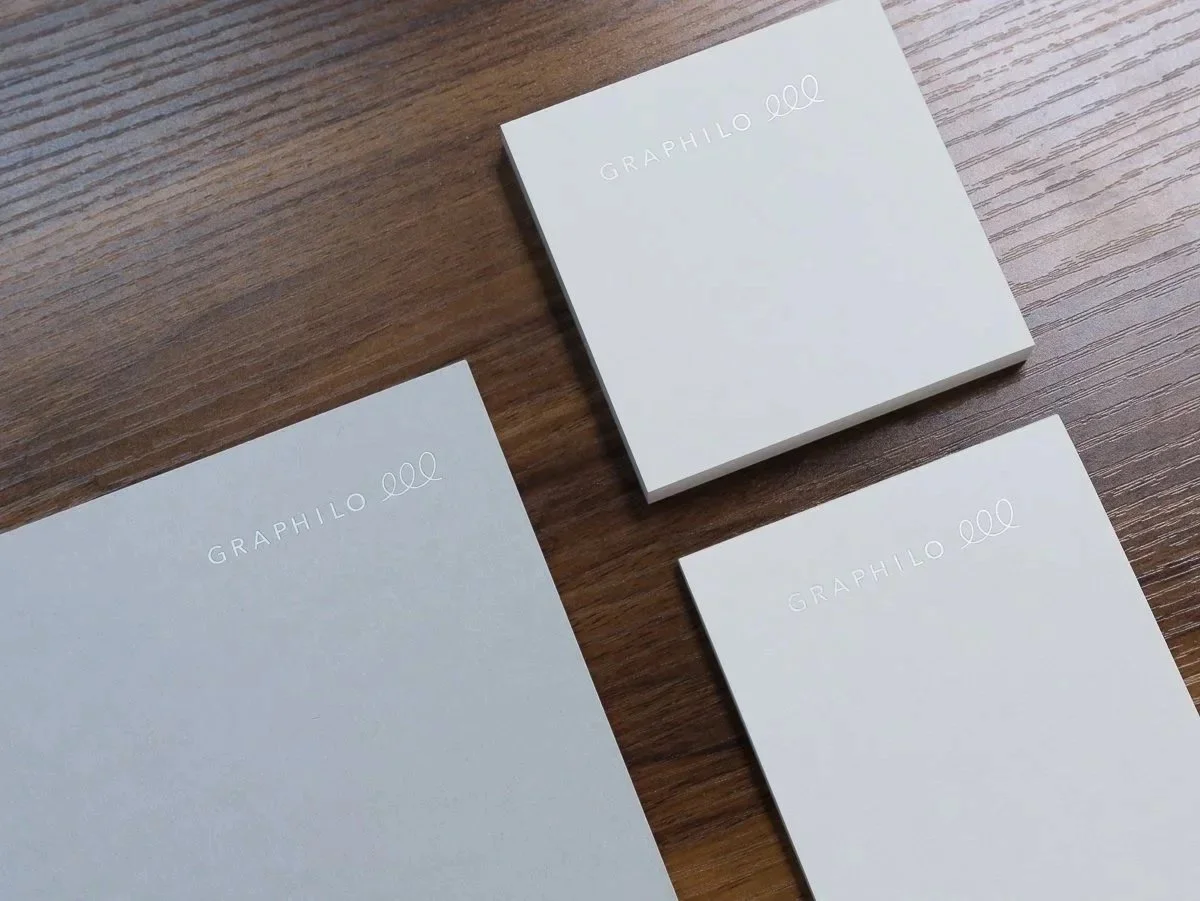
Kobeha Graphilo Paper Cover Image with different sizing

Paper Review: Graphilo by Kobeha

July 11, 2026

Earlier this summer I revamped the "Hierarchies of Fountain Pen Friendly Paper" site resource, and one major change I made was to add Graphilo paper as a top-tier option. Graphilo has assumed something of a cult-favorite status due to how difficult it was to obtain in the United States (and when you could find it, how expensive it could be). As it becomes more easily available outside of Japan, I strongly recommend Graphilo as an option for anyone looking for ink friendly paper with exceptionally good color reproduction.

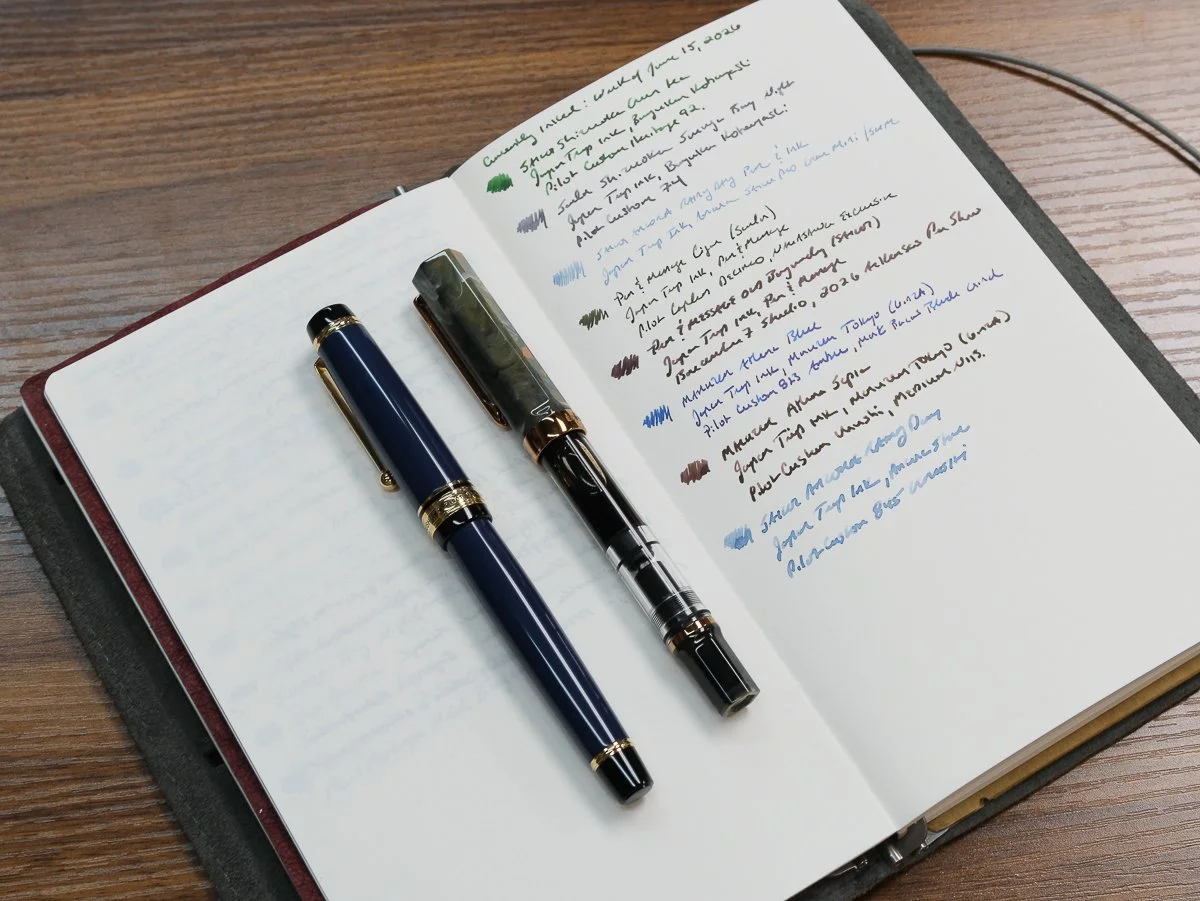
Graphilo and Roterfaden Currently Inked Log

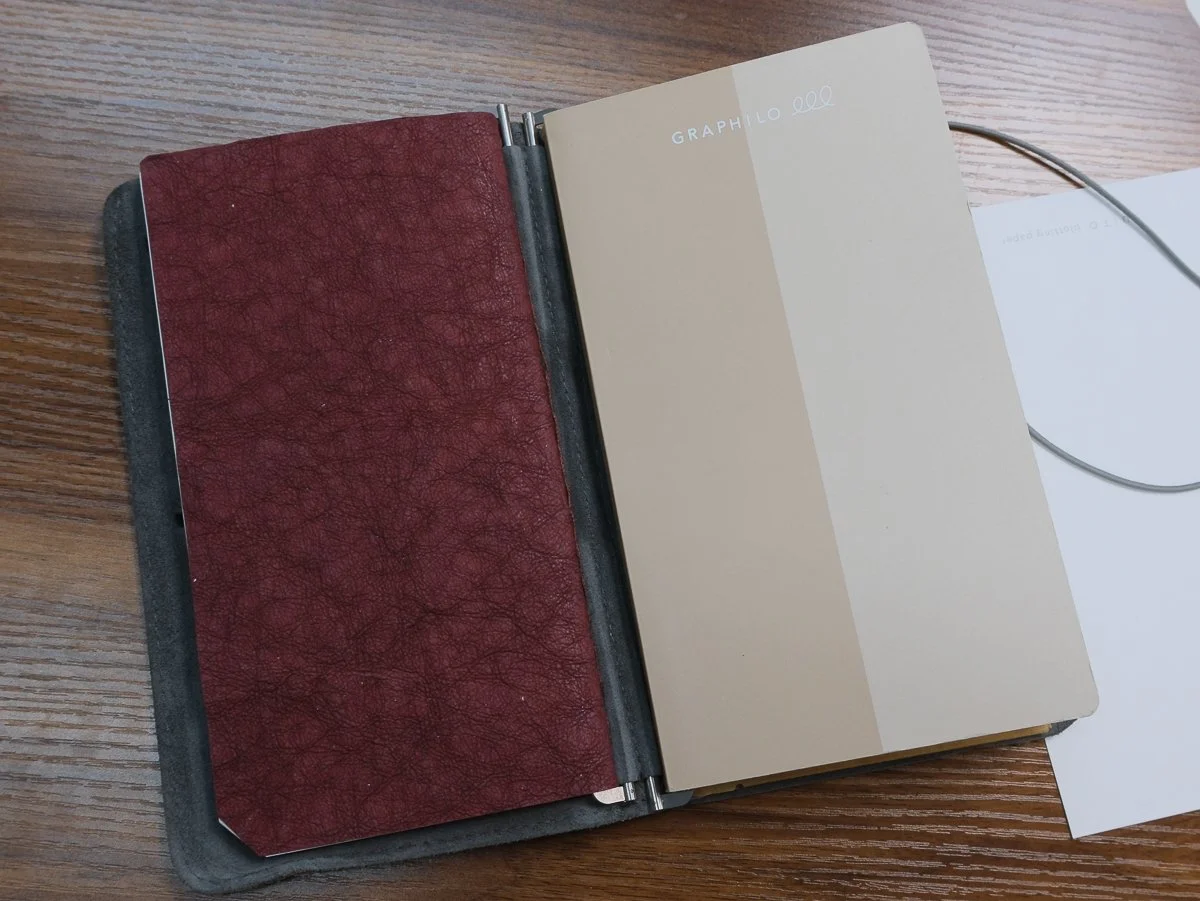
I’ve been using an A5 Slim Graphilo Notebook in my Roterfaden TGS_25 to log all of my currently inked pens.

Graphilo is made by Kobeha, a paper company located in Kobe, Japan. Specifically formulated for fountain pens, Graphilo has survived several different iterations, with each new release fine-tuning the paper formulation. In my opinion, all of them have been excellent, with the last two batches qualifying as superb.

The Herbin shimmer inks combine shading, sheen, and shimmer, so they offer an excellent example of what Graphilo is capable of.

Even with growing distribution, Graphilo is still relatively expensive, so why splurge? It’s a combination of factors: Most people enjoy this paper not just for its ability to handle any ink you throw at it, but also for its superior color reproduction. You will always get sharp lines without feathering and bleedthrough, but many feel that no paper showcases fountain pen ink properties better than Graphilo, particularly shading and multi-chromatic inks. Color is very subjective - I personally prefer how my fountain pen inks look on MD Cotton Paper and Graphilo, so I tend to use notebooks containing one of these two papers whenever I'm experimenting with new inks or writing out my "currently inked" lists to keep track of what inks I have in which pens.

Herbin’s Opale Nocturne is one of my favorite shading inks with subtle shimmer. I love how it looks on Graphilo paper.

Another reason that I love Graphilo is that you get the ink friendly performance of Tomoe River in a heavier paper (81.4g) with slight texture for those who dislike the onionskin-like feel of Tomoe River. That said, the biggest downside to Graphilo is the dry time - like most paper intended to showcase fountain pen ink, it's not absorbent, so it may take some time for the ink to dry when writing with especially wet nibs. If you plan to use Graphilo in a context where you are having to turn pages quickly, you may want to use blotting paper.

Extreme shaders like the Sailor Ancora Rainy Day Ink (Sorry, it’s a Japanese store exclusive) really show off their properties on Graphilo!

Takeaways and Where to Buy

Personally, I find Graphilo paper among the most fountain pen friendly paper I have ever used. For those who dislike the ultra thin feel of Tomoe River and similar paper, and prefer a heavier weight with greater durability, Graphilo is high on my list of personal recommendations. I have yet to find a fountain pen ink that bleeds or feathers, and I even know people who have pushed this paper with sharpies and alcohol markers and had decent results.

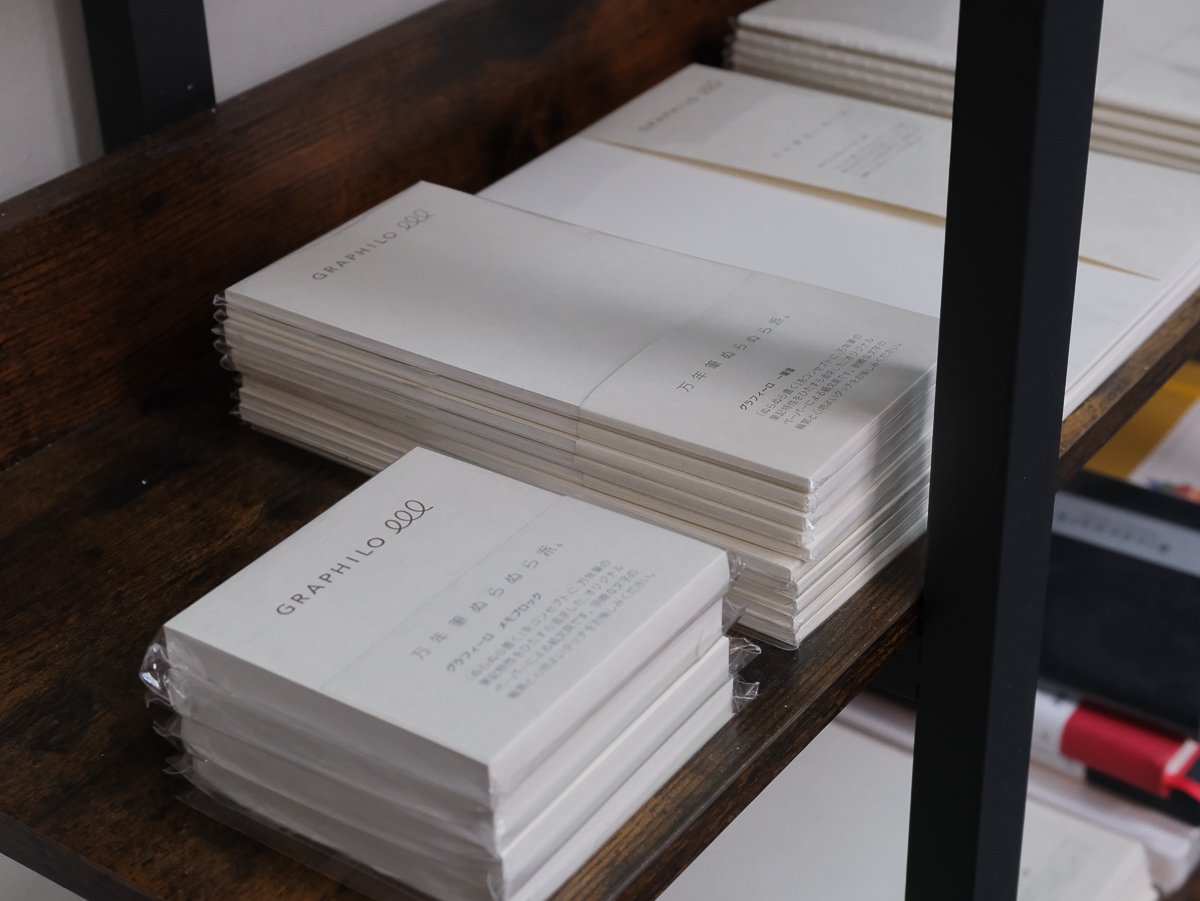
Though Graphilo is not an inexpensive paper option, the price has gradually aligned over time with other high-end Japanese writing papers. Kobeha has increased production while also making the paper available in a wider range of formats, including A5 Slim, A5 Square, and standard A5, as well as looseleaf, memo blocks, and letter pads. We currently stock all of them in our own shop.

Graphilo in my TGS_25 Roterfaden

The Graphilo A5 Slim (right) which will be coming back in stock in the hopefully near future.

The Gentleman Stationer carries most varieties of Graphilo paper, though because this paper is imported directly from Japan, specific items may not be in stock at the same time. We regularly order so if the particular paper you are looking for is not showing as available, keep checking back.

In Notebook Review Tags Graphilo, Paper Review, Fountain Pen Friendly Paper

What's On Your Desk? My Personal Favorite Papers for Fountain Pens, 2025

September 17, 2025

Over the weekend I updated the long-running post “Hierarchies of Fountain Pen Friendly Paper” to reflect new products on the market and changes in availability of certain papers that I consider “fountain pen friendly”. I don’t believe that I’ve ever written a designated post discussing my personal favorites from that list, so here goes!

How I Use Paper and How It Affects My Preferences

Because this post addresses my own personal preferences, I should probably talk about what those are first. For my personal writing, I enjoy using more textured, relatively absorbent paper with a softer writing feel. My primary considerations are (relatively) quick dry times and the ability to write on both sides of the page. Because I use a lot of planners and ring or disc notebooks, I also value perforated pages, or at a minimum, paper that comes in tear-off pads or looseleaf sheets that can be hole-punched or cut down to different sizes. What don’t I pay a lot of attention to (at least beyond the basics)? The nuances of ink color and shading/sheen/shimmer, since most of my writing is more functional and not retained long-term, and also because I think Midori MD Cotton - my favorite - does a more than adequate job with ink. Three of the papers on this list are long-timers (both Midoris and the Tomoe River 68gsm), and two are recent additions (Soliste and Maruman Basic).

  1. Midori MD Cotton. My all-time favorite writing paper, even if it mostly comes in blank, unruled notebooks and writing pads. Midori MD Cotton strikes an excellent balance between absorbency and ink-friendliness, will dry relatively quickly without feathering or bleeding, and for those who do value color reproduction, actually does a pretty nice job of showcasing inks. I was sad to hear at this year’s San Francisco Pen Show that Plotter is not going to continue to make the A5 and Bible-sized refills featuring the MD Cotton Paper with letterpress ruling, which is what is shown in the pictures here.

  2. Yamamoto Soliste. A relatively new paper that Yamamoto has popularized, the off-white Soliste is uncoated and textured, yet not quite as absorbent as MD Cotton Paper. I find that it has a soft feel, which is especially noticeable when used in notebooks like the Yamamoto Ro-Biki system. If you enjoy the feel of papers like Iroful or Cosmo Air Light, but desire something slightly less “spongy” (for lack of a better term) consider giving Soliste a try.

  3. 68gsm Tomoe River Paper. Each year, as we watch the “classic” 52gsm Tomoe River Paper undergo production changes and reformulations, I worry about the 68gsm version, which is my favorite of the two. Slightly heavier, and in my opinion, more textured with better dry-times and performance for everyday writing, this is my favorite paper to use in A5-Slim/Traveler’s-size notebooks ever since Lochby introduced its own “Voyager” refill. Currently, third-party companies Lochby and Odyssey notebooks are the only ones who I know who are using the 68gsm version in large quantities, and I worry that eventually it will run out since I don’t believe it is being produced any longer. Hopefully I’m wrong.

  4. Midori MD Paper. I would also include Plotter paper under this header. While standard Plotter paper is marketed as a different product and has a different formulation, it comes from the same product family and for my purposes behaves similarly. I love Midori paper for the variety of layouts, ranging from blank or grid pads to dot grid colored paper to memo blocks to letter pads.

  5. Maruman Basic (70 gsm). I was late to the party on this one, but I was happy to discover this cost-effective fountain pen friendly paper that I enjoy using for work. Slightly lighter weight than Maruman Mnemosyne, I don’t see much of a drop off in performance, and the sturdy spiral binding and chipboard cover has held up well in my bags. Also: perforated pages! I can’t emphasize how nice that is!

I wish Midori would expand its use of the cotton paper, like the limited edition Plotter refill shown here. MD Cotton is my personal ink swatching paper of choice, even if some would argue that it darkens the colors.

If I’m drawing or playing around with ink purely for personal enjoyment, there’s a 90+% chance I’m using Midori MD Cotton. For notetaking and everyday work, however, I will probably be using the Maruman Basic Spiral Notebooks or some version of Midori MD Paper (including the various Plotter refills). These papers strike a good balance between performance and cost-effectiveness, and come in a wide range of different rulings and formats.

If I had one recommendation to those looking for that “perfect” paper: test as many different papers as you can. Paper is still relatively inexpensive, so it’s easy to buy a handful of different notebooks and samples to dial in your preferences once you have a general idea of your overall needs and what you think you like. Pen clubs and shows are often great places to test out different papers, as people are usually willing to share. Finally, we keep samples and testers of most papers available in our shop, so if there is something you’d like to see or write on, I will often be able to go get it for you. It gives you a reason to come see us!

Our brick and mortar store is open this week from 1-6pm Thursday and Friday, and from 10am-6pm on Saturday. You can of course always shop with us online, 24-7!

Maruman Basics Dot Grid Paper: An everyday workhorse.

In Paper Products, Notebook Review, Editorial Tags Fountain Pen Friendly Paper, Personal Paper Preferences, Paper
1 Comment

Complementary Notebook Systems and Stationery: Yamamoto Bullet Jotters

July 26, 2025

Of all the notebook systems, planners, and related products on the market, what I really appreciate is a brand or system that doesn’t lock you into a specific format, allowing you to experiment with different types of paper and to mix-and-match refills. It’s a big reason why I like flexible cover-based systems like the Lochby Field Journal series, the Roterfaden Taschenbegleiter, and binder and disc-based systems that you can really unlock by buying a hole punch and using whatever paper you choose. In my Notebook Systems 101 workshops that I’ll be holding at the upcoming D.C. Pen Show next week, how different planner and notebook systems interact and complement one another will be a major topic of discussion.

To that end, I wanted to spotlight a new product from Yamamoto Paper: The “Bullet Jotter,” which is a Personal/Bible-sized notepad holder that can be used as a stand-alone product or as a companion to a Bible-sized binder from brands such as Plotter. This small portfolio measures roughly 4.5” x 7.2”, lies completely flat, and holds two pads of Bible-sized paper (one pad of Soliste and another of Sheep Clouds Bond are included). You can use the notepads as is, and the paper can also be hole-punched for filing, as shown below in my Plotter.

I used a Carl/Plotter hole punch to add the sheet of Sheep Clouds Bond to my Bible-size Plotter.

Yamamoto, a Japanese paper distributor, has sourced six different Japanese papers to fit the Bullet Jotter (or to use as individual notepads). In addition to the Soliste and Sheep Clouds Bond, there are pads of Sanzen Tomoe River, Canopus, Meringue, and Slight White. Some of these already have been made available in Yamamoto’s sampler packs and A4 looseleaf sets, but Canopus and Meringue are new papers that I look forward to exploring.

As of this morning you can get the Yamamoto Bullet Jotter, refills, and plenty of other Yamamoto papers in our shop. We’re somewhat frantically trying to get a ton of new inventory listed before the D.C. Show, and these might come with us. Please note that we are open today (Saturday) for in-person shopping, and will be open Thursday for limited hours before closing next weekend for D.C. You can keep track of updated hours here.

In Notebook Review Tags Yamamoto Paper, Yamamoto Bullet Jotter, Planners, Notebook Systems
Comment
Yamamoto Ro-Biki Note Covers and Refills Compared

TRAVELER's Notebook vs. Yamamoto Ro-Biki: What's the Difference?

July 9, 2025

Since I’m becoming something of a notebook system specialist (Check out our new resource here!), I sometimes get questions about how the different systems compare to one another. While the Traveler’s Notebook is the most widely known “tall narrow” notebook format, there’s another option out there: The “Ro-Biki Note” series of notebooks from Yamamoto Paper. Online photos can create the perception that these two systems are related and/or interchangeable, and that’s not necessarily the case. Here are a few key differences:

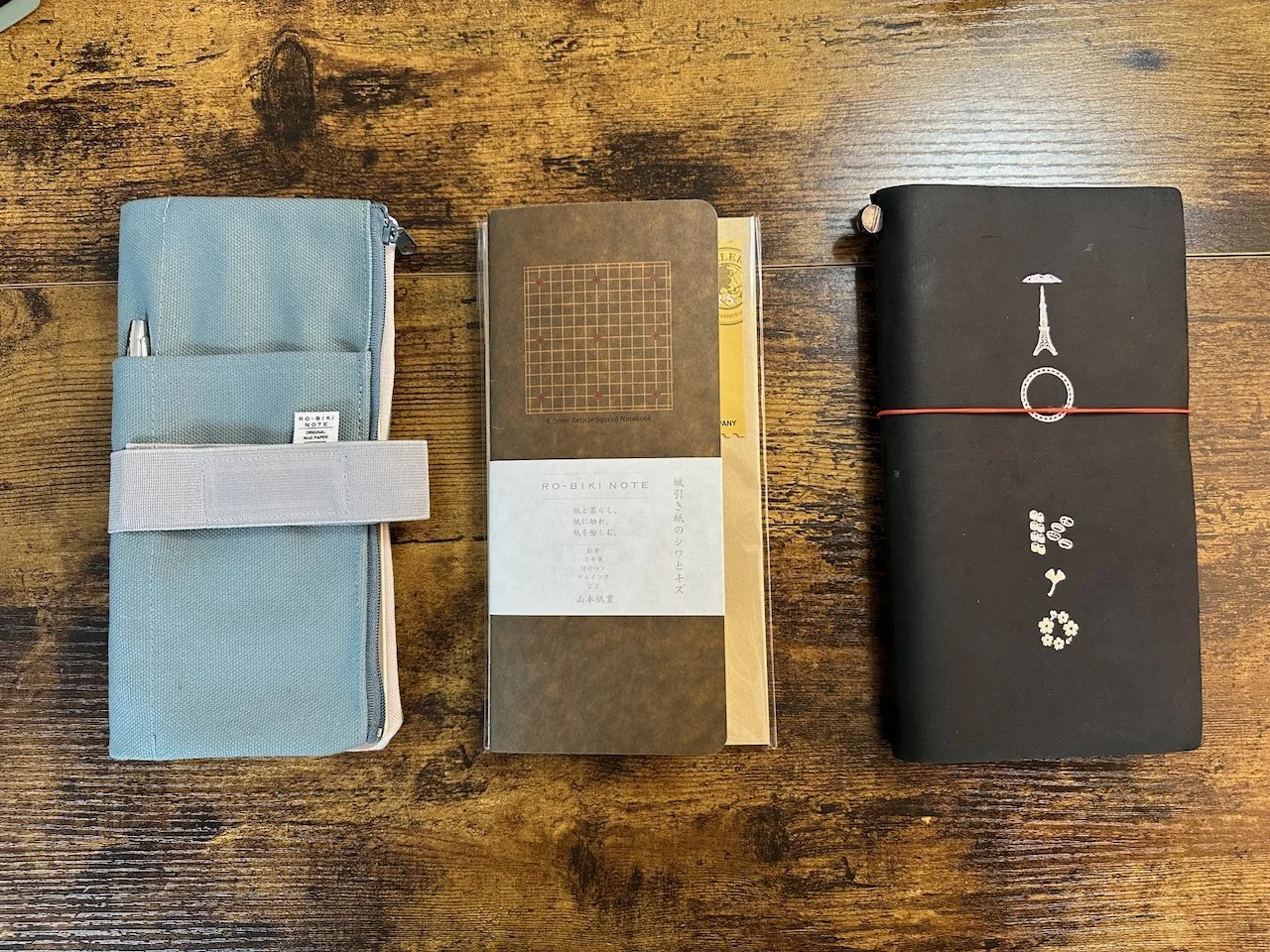
The Ro-Biki canvas cover is actually more of a wrap. It ships with a velcro strap that not only closes the cover but also allows you to secure pens and other accessories in the outside pocket.

  • Different Measurements. While both Traveler’s Notebook and Ro-Biki are the same height (8.25”), the Traveler’s refill notebooks are roughly 4.25” wide, and Ro-Biki notebooks are 3.75” wide. This means that Ro-Biki notebooks will fit in a standard-size Traveler’s Notebook cover but a Traveler’s refill will be too wide for the Ro-Biki canvas cover (unless you trim the Traveler’s refill down).

  • Different Paper. Both brands use excellent paper that works well with a wide range of writing instruments - including fountain pens. Traveler’s Company mostly uses Midori MD paper for its standard refills (both companies share the same corporate parent), while also offering a wider range of options including watercolor, sketch, and ultralight Tomoe River paper. For the Ro-Biki notebooks, Yamamoto has chosen a soft cream-colored paper that I’ve seen identified as either “Chiffon Cream” or “Soliste” (which is one of the select papers in Yamamoto’s latest round of A4 packs). Again, both brands use good paper and this will come down to personal preference.

  • Different Build/Aesthetics. Traveler’s Company uses a cord-based system to hold the refills inside a basic leather cover that closes with an elastic band. The Ro-Biki is a bit more unique, in that Yamamoto has commissioned a cotton canvas cover that incorporates a zippered case and pockets along the outside. If you enjoy the Ro-Biki paper and notebook dimensions, you might find that the Ro-Biki also offers more built-in functionality out of the box, though this comes at the expense of customization. Those looking to avoid leather might also prefer the Yamamoto option.

I might take a Ro-Biki to the beach next week, since I can take it to the pool and down to the water without worrying about water getting splashed on leather.

Sorry, some of my writing had to be blurred here, for personal reasons.

Ro-Biki notebooks attach to the canvas cover by sliding the back cover of one notebook into a pocket, and then attaching additional notebooks to the “anchor notebook” using two supplied rubber bands, which are very thin and unobtrusive. Oh, and can we also get a shout-out for reticle grid? It’s one of the more underutilized rulings, IMHO.

Regardless of which stationery pouch I’m carrying, I have post-it notes, stamps, and document flags with me.

Takeaways and My Personal Thoughts

Traveler’s Notebook and Yamamoto Ro-Biki Note are different products that I suspect will appeal to different users. Traveler’s Notebook is more of a truly customizable system/system techo, while I’d characterize Ro-Biki as a notebook with a bit of built-in functionality in the canvas cover (which may be perfectly adequate for many users). Update: I’ve published a YouTube demonstration of me setting up the Ro-Biki, plus a size comparison with the Traveler’s Notebook.

Personally, I love Yamamoto’s Soliste paper, and I’ve enjoyed using one of the Ro-Biki reticle-grid notebooks for testing. This was enough to make me grab one of the covers for myself, as I already have Soliste hole-punched in my Plotters for general writing and the Ro-Biki Note paper has the same soft feel to it. (I’d love to confirm whether these are indeed Soliste notebooks - stay tuned.) Whatever paper it is, it’s handled all my inks quite well, and it makes me want to keep writing with it.

As of today, we have Yamamoto Paper Robiki covers and Robiki-Note notebooks in stock, and of course we continue to offer the full Traveler’s Notebook lineup and the new similarly sized Lochby Voyager Journals. Come see us in-store this week, starting tomorrow and Friday from 1-6, and Saturday from 10-6. Next week (July 13-20) we will be on vacation so get your shopping in before then!

In Notebook Review Tags Traveler's Notebook, Yamamoto Paper, Yamamoto Ro-Biki, Ro-Biki Note, Notebook Systems, Notebook Review
4 Comments
Older Posts →
Store Hours and Events
Shop T.G.S. Online
Updated 2026 "Best Pens" Guide
No results found
On The Paper Trail: Live In Nashville Event Tickets Now Available!
TGS_25 Roterfaden Restock Notification
Hierarchies of Fountain Pen Friendly Paper

Join Our Patreon!
Subscribe to the TGS E-mail List

Featured Posts

Featured
Everyday-Stationery-Bags
July 25, 2026
What's the Best Everyday Stationery Bag? My Own Considerations and 5 Options for Pen Show Season
July 25, 2026
Read more →
July 25, 2026
Graphilo-Kobeha-Paper.jpg
July 11, 2026
Paper Review: Graphilo by Kobeha
July 11, 2026
Read more →
July 11, 2026
Pilot-Custom-Heritage-92.jpg
June 6, 2026
Workhorse Pens: Pilot Custom Heritage 92 Fountain Pen
June 6, 2026
Read more →
June 6, 2026
The Gentleman Stationer RSS

View Cart

© Digital Divide Media, LLC, 2014-present.

All content is the exclusive property of Digital Divide Media, LLC, d/b/a The Gentleman Stationer, including “The Gentleman Stationer” website and trademark, and should not be reproduced without express written permission.  All rights reserved.

All content containing paid advertising, affiliate links, or sponsored content will be plainly disclosed by a disclaimer when/if featured.

Contact Information

Website Terms and Conditions

Store Shipping Policy and Return Policy

Privacy Policy and Cookie Policy

Accessibility Statement

Powered by Squarespace