• Blog
  • Shop
  • Podcast
  • Resources
  • Archive
  • About
  • Contact
  • Cart
  • Sign In My Account
Menu

The Gentleman Stationer

Vintage Living in the Modern World.
  • Blog
  • Shop
  • Podcast
  • Resources
  • Archive
  • About
  • Contact
  • Cart
  • Sign In My Account

Offbeat Ink Colors for Everyday Writing: Anderillium American Goldfinch Yellow and Ferris Wheel Press Roaring Patina Black

January 21, 2023

This year, I’ve introduced a new rotation system that hopefully will ensure I use more of my pens, especially those favorites that haven’t been getting the attention they deserve. I’ll write more about specifics once things have broken in a bit more, but the gist is that I’ve divided my pens into several categories (“Desert Island/Favorite” pens, pens from independent makers, limited/special editions from standard makers, favorite brands, etc.), and the goal is to have a 1-2 pens from each category inked up at any given time, cycling in a new pen when one is written dry or at the end of the month, whichever comes first. It’s worked well, but a side benefit of this system is that I’ve been re-inking pens more, and therefore also using more of my ink collection and finally getting around to testing out a number of inks that have been in the queue. Today I’ll talk about two that I’ve really enjoyed, both of which are offbeat colors that pleasantly surprised me.

When wet, as shown here on Midori MD Cotton paper, the ink is a brighter yellow. Note the gold tones on the drier writing sample as opposed to the swab.

Anderillium American Goldfinch Yellow: Finally, a Legible Yellow Ink I Can Use Every Day

For years now, I’ve been on a mission to find a yellow ink. I know, it’s a somewhat odd color to fixate on, but I’ve really been wanting an ink that I can use to both highlight and annotate - one that’s not too dark, but at the same time legible. The latter has been the main problem. Most yellow inks are fine as highlighters, but when you try to actually write with them it looks, well, like you’re writing with a highlighter. You can’t read it easily.

On the off-white Plotter paper, Anderillium American Goldfinch dries to a darker golden yellow hue.

Anderillium inks are known for their offbeat, somewhat unusual takes on classic fountain pen ink colors. As it turns out, “American Goldfinch Yellow,” from their Avian series (based on birds), is exactly what I’ve been looking for. When wet, the ink resembles your classic yellow highlighter, but dries to a richer gold color that’s almost, but not quite, orange. It’s legible enough to use for annotation or everyday writing, depending on your use case. I currently have this ink in my Franklin-Christoph Model 20 in “Winter Pine” acrylic, paired with a medium S.I.G. (Stub Italic Gradient) nib that’s an excellent match for how I want to use this ink.

Of the two inks I’m reviewing today, American Goldfinch Yellow is the one that’s widely available, and we carry Anderillium Inks in the T.G.S. Curated Shop, priced at $14.50 per bottle. I’ve previously reviewed other colors in the series as well, including Cuttlefish Brown, the Michigan Avenue Chicago Pen Show Special Ink, Colossal Squid Dark, and Green Kingfisher Green.

Ferris Wheel Press Roaring Patina Black

One of Ferris Wheel Press’s 2022 limited releases, I hesitated to pick this one up giving my limited use of shimmer ink, but I’m glad I have a full bottle. Roaring Patina Black is a relatively uncommon pairing of a rich black ink with gold shimmer and, according to Ferris Wheel Press, a red sheen. (I’ve not seen much of the sheen, but I’ve also not been using the right paper as most of my writing has been “practical” so far this month.) I wouldn’t characterize this ink as a pure black, as it has some rich blue/purplish-undertones that complement the gold highlights.

View fullsize Ferris Wheel Press Roaring Patina Black
View fullsize Sheen and Shimmer Up Close

Roaring Patina Black features what I refer to as “subtle shimmer” - it’s not so in-your-face glittery that you can’t use it for work, and the shimmer particles are fine enough that they won’t clog your pen. I’ve had this ink in my Graf von Faber-Castell Classic Macassar for the past two weeks without issue, and the “Art Deco” theme of this ink perfectly matches the look of the pen. Unfortunately, Roaring Patina Black was released as a limited edition so it’s no longer widely available, and I was unable to find any retailers with the ink in stock. If you can find it, buy it, because it probably won’t last very long. I enjoy Ferris Wheel Press inks, but looking back I haven’t reviewed very many, other than Peppermint Drop, another red sheener.
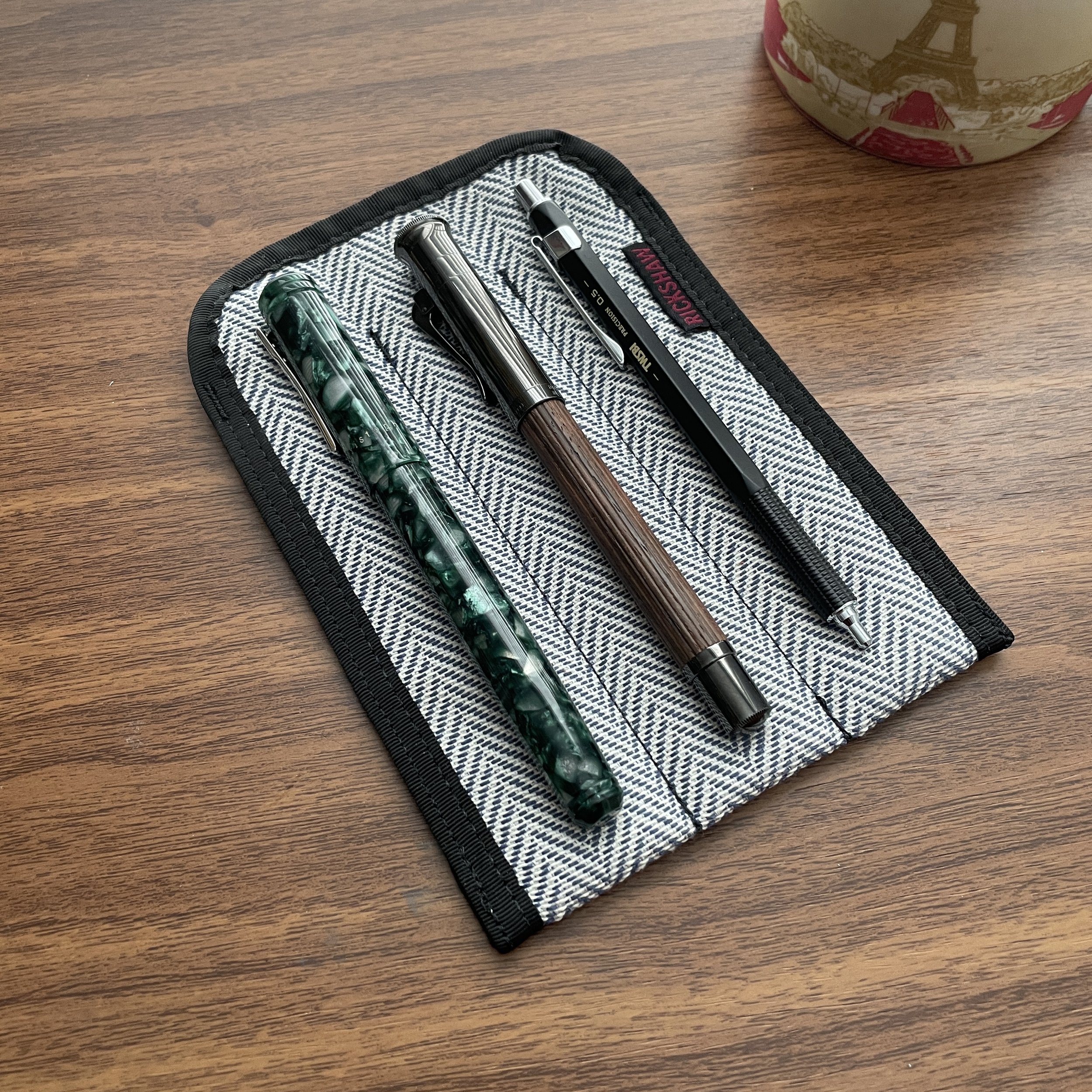
This week’s review pens: Franklin-Christoph Model 20 in Winter Pine (left) and Graf von Faber-Castell Classic Macassar.

Longtime readers of this site will know that I don’t use crazy inks: 80% of the time my pens are inked up with standard dark blue / dark green / dark red, but for the other 20% I like to play around with more offbeat colors. That said, even with more unusual ink colors or properties, I have little patience for inks that bleed, feather, and never dry, or only work on certain specific papers with certain nibs. Neither of the two featured here have given me any problems. Sometimes you have to hunt around - sometimes for a very long time - but well-behaved, relatively low-maintenance inks do exist outside of the standard blue/black/blue-black color scheme!

Note: Though I’ve found it to work fine in fountain pens, Ferris Wheel Press Roaring Patina Black is a shimmer ink, meaning that the ink contains fine particles of gold shimmer material. If left in a pen for too long and allowed to dry out, all shimmer inks will clog your pen. If this happens, flushing the pen with water should resolve any issues, but it’s always a best practice to clean your pen every few weeks if you’re using inks such as these.

The Gentleman Stationer is supported entirely by purchases from the T.G.S. Curated Shop and pledges via the T.G.S. Patreon Program. This post does not contain third-party affiliate links or paid advertising. I purchased the Ferris Wheel Press Ink with my own funds, for my own use.
In Ink Reviews Tags Ink Review, Anderillium Ink, Anderillium Ink American Goldfinch Yellow, Ferris Wheel Press, Ferris Wheel Press Roaring Patina Black
Comment

Technical Pens and Pencils: The TWSBI Precision Ballpoint and Mechanical Pencil

January 18, 2023

So-called “drafting” pens and pencils are sometimes considered a category unto themselves, or as a subset of the slightly broader “technical” pen and pencil category. Long-dominated by the beloved (and excellent) Rotring 600 and 800, many companies have shied away from introducing their own version of this classic piece of stationery kit, despite it’s enduring popularity. Not TWSBI, who over the years has introduced four different mechanical pencils, two ballpoint pens, and a technical-style fountain pen through their “Precision” line of products. Today I’ll take a look at the Precision mechanical pencil and ballpoint.

The Precision Mechanical Pencil comes in both fixed and retractable-pipe versions.

So What Distinguishes the TWSBI Precision Line of Pens?

If you (like me) already own multiple Rotring 600 and Rotring 800 pens and mechanical pencils, what differentiates the TWSBI Precision to the point that you might want to give this particular pen and/or pencil a shot? Here are my main points to consider:

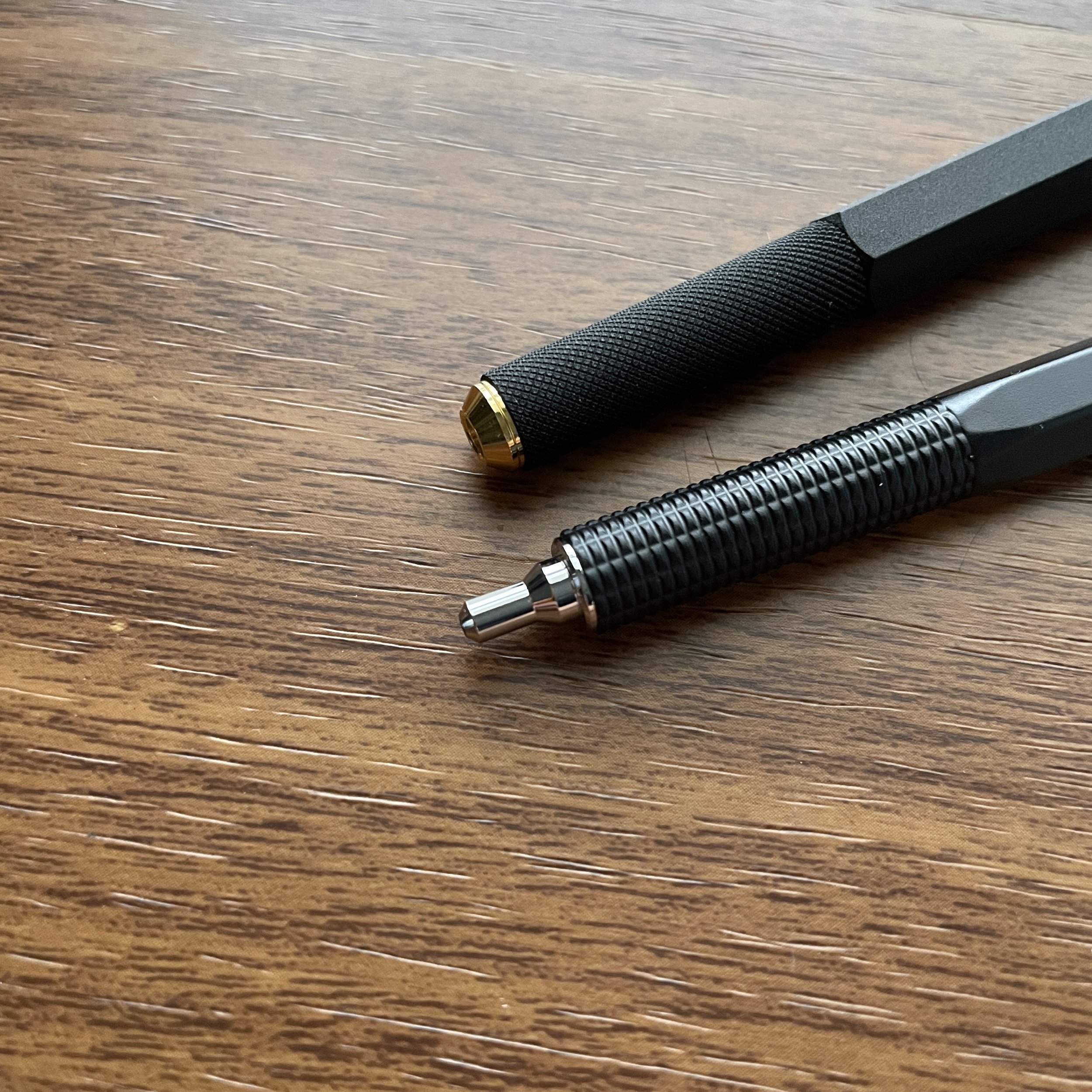
  • Different Knurling on the Grip. The primary difference I would highlight is the knurling (or grip texture), because this aspect will likely affect your everyday writing the most. Rotring uses a rougher, almost sandpaper-like texture that people either love or dislike depending on whether it hurts their fingers. Personally, I’m a big fan of the Rotring grip, which I think gives the pen a tactile writing experience that’s not duplicated elsewhere, but I also enjoy TWSBI’s approach. The Precision grip appears to be molded into the barrel as opposed to machined, so the knurling is slightly more raised and can have a softer feel. It all comes down to personal preference.

  • Slightly Softer Edges on the Hexagonal Barrel. I’ve never noticed it until this direct comparison, but the edges on the Rotring pens are pretty sharp. The TWSBI Precision is more rounded, akin to the Caran d’Ache 849, though I would place the Precision “in the middle” between the other two.

  • Different Aesthetics. Rotring famously adheres to a black/silver + red color scheme, and though they’ve moved away from that in recent years with a few new base colors, the overall aesthetic remains consistent. I would characterize the finish on the TWSBI Precision as more “satin” as opposed to Rotring’s true “matte”, and the TWSBI’s chrome clip, knock, and tip look nice on either the black or silver pen/pencil.

  • Different Mechanism on the Retractable Pipe Mechanical Pencil. I previously reviewed the Rotring 800, and I love how that pen features a twist mechanism on the knock that allows you to retract the sleeve / “pipe” for pocket carry. The TWSBI Precision has a similar feature, though you need to depress the knock and press down gently to get the pipe to retract. It’s less convenient, but it’s also a less expensive pencil.

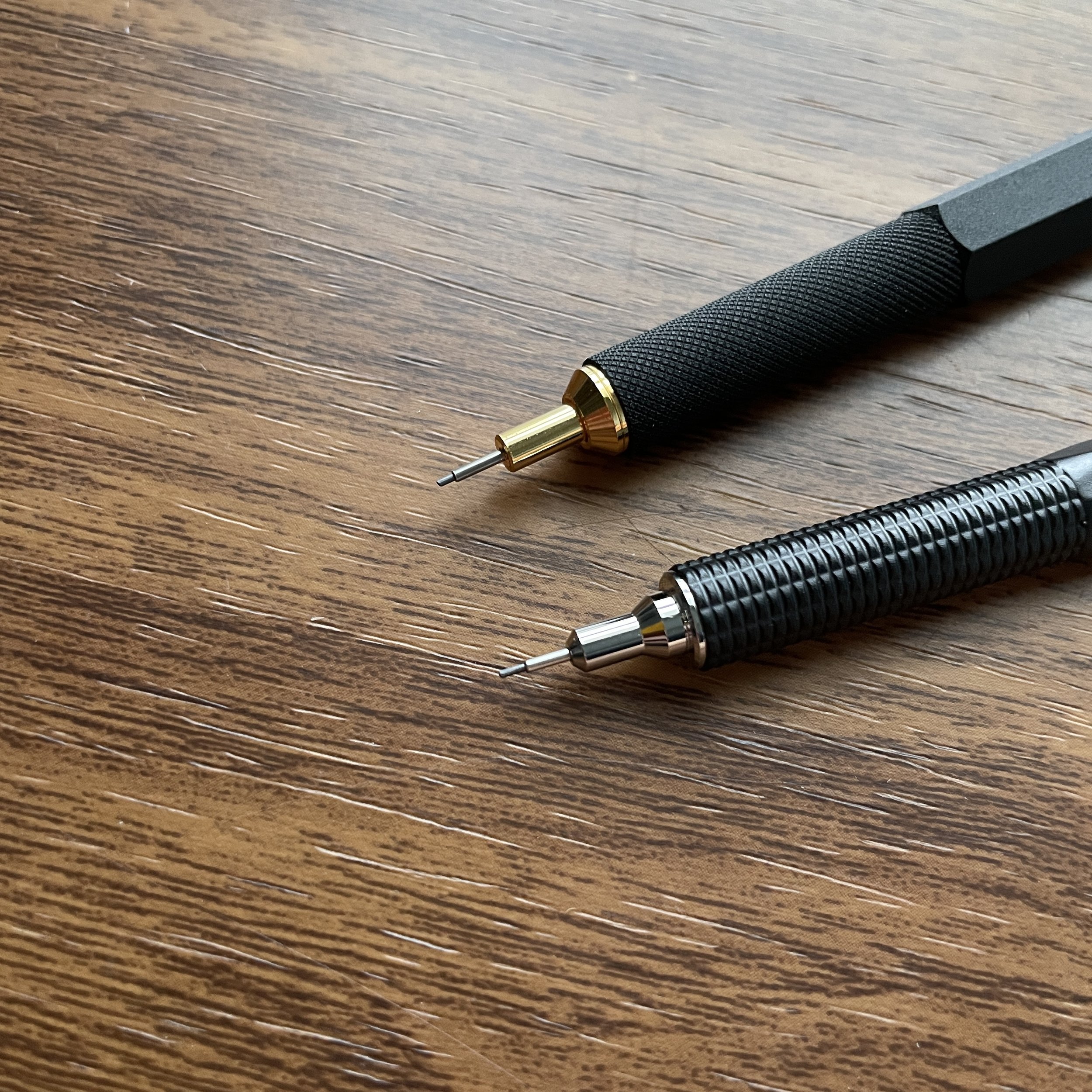
The knurling on the TWSBI Precision (top) and the Rotring 600 (bottom) is very different. One is not better than the other - they just have a completely different feel. Note that the tip on the TWSBI Precision ballpoint extends slightly farther than on the Rotring 600. Personally, I like this because I enjoy more needle-tip pens that feel as though they provide more control over my writing. Others prefer how the Rotring looks.

See the gallery below for a comparison between the Rotring 800 retractable mechanical pencil and the TWSBI precision mechanical pencil, both retracted (right) and extended (left).

View fullsize TWSBI Precision vs. Rotring 800 Retractable
View fullsize TWSBI Precision vs. Rotring 800 Retracted

General Functionality and Writing Experience

Overall, the Precision provides a very nice writing experience for the price point. The Precision pens and pencils are approximately the same weight and length as the Rotring 600, and slightly shorter/slimmer than the Rotring 800. Due to the different texture, the feel in the hand is more akin to the Caran d’Ache 849, and those who appreciate the 849 line of writing instruments but find themselves wanting a more textured grip section and slightly longer barrel should consider the TWSBI Precision.

While the pens discussed here all share certain design elements, they have their own unique feel in hand and will appeal to different users in terms of both aesthetics and functionality.

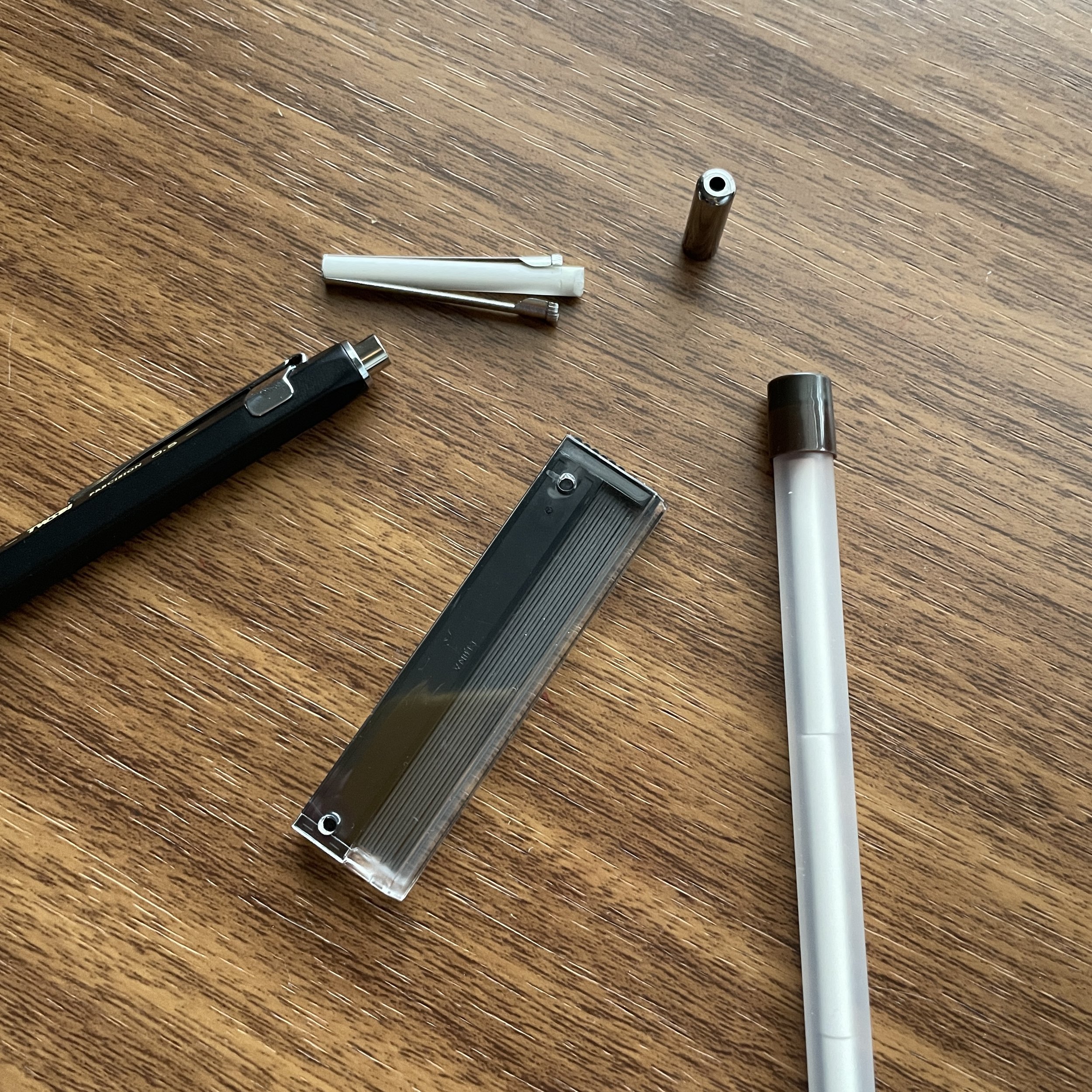
Though not a game changer, I wanted to point out that TWSBI adds value by including a pack of leads and replacement erasers with the Precision mechanical pencil, and a second Parker-style ballpoint cartridge with the ballpoint pen. The erasers are a cool touch - they’re super long, do their job well, and should last you for a while. The TWSBI-branded ballpoint refill is quite nice, but if you prefer something else it’s Parker-style so you can swap in your choice of the endless Parker-style ballpoint/gel/capless roller refills out there.

I love the long eraser on the TWSBI Precision. Plus you get three of them, likely enough to last you years unless you really enjoy your mechanical pencil erasers.

Takeaways and Where to Buy

To be perfectly honest, now that I’ve been using my own Precision ballpoint and Precision .5mm retractable mechanical pencil for a couple of months now, I’m kicking myself for having waited this long. In my opinion, TWSBI doesn’t do a great job of promoting their non-fountain pen product line, and even though many people have commented about how nice their mechanical pencils are, it’s one of those products that I put off trying and reviewing for years. I’m now wondering whether it’s time to pick up a Precision fountain pen.

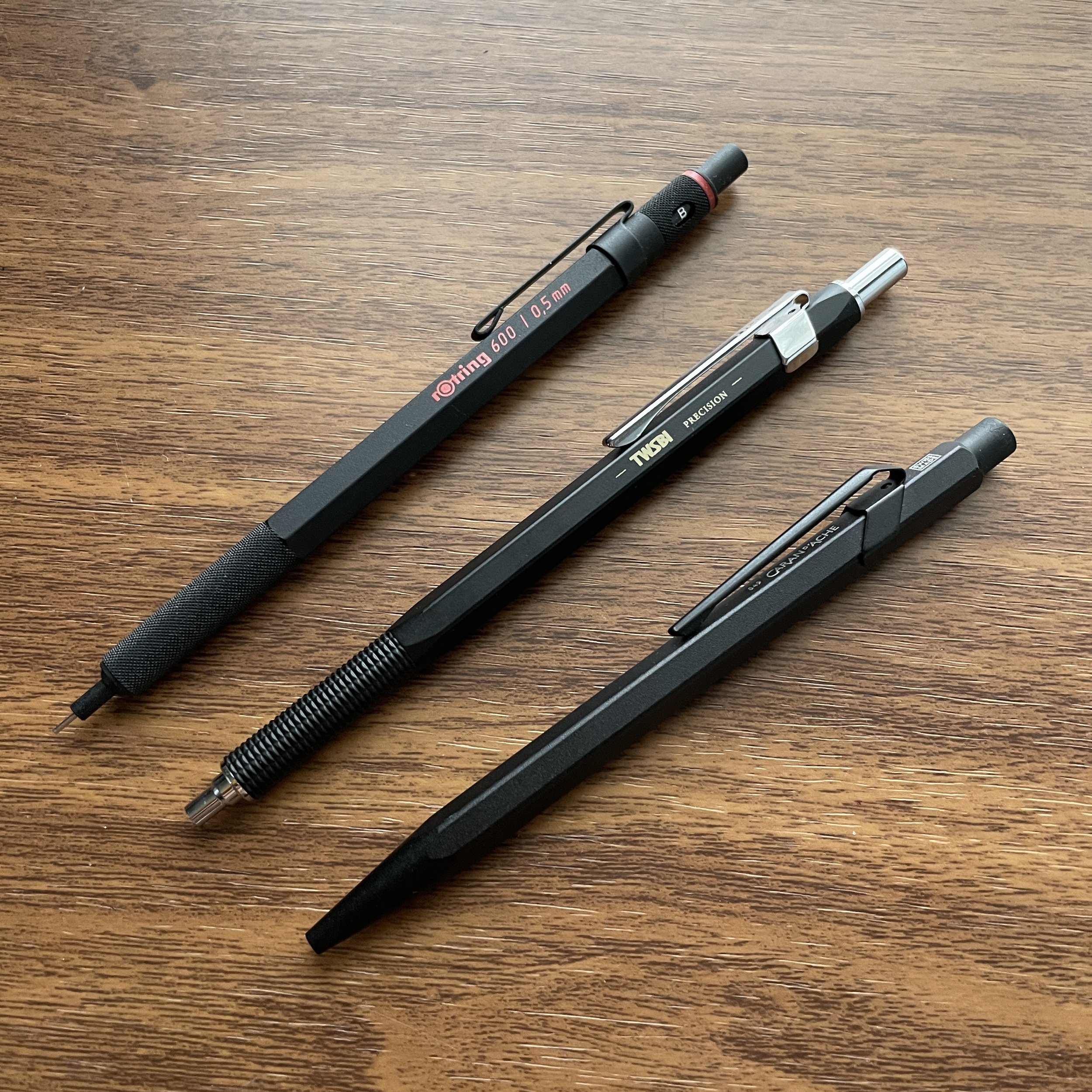
Three different pens/pencils, three great options: the Rotring 600 (top), the TWSBI Precision (center), and the Caran d’Ache 849.

We recently added the TWSBI Precision line to the T.G.S. Curated Shop, and currently stock both the Precision Ballpoint and Precision Mechanical Pencil in all colors and subtypes. As noted above, the mechanical pencil is available with both .5mm and .7mm lead sizes, with a fixed or retractable pipe. Both Precision Ballpoint Pens and Mechanical Pencils are priced at $25, which I personally consider a very fair value.

Disclaimer: The T.G.S. Curated Shop is an authorized retailer of TWSBI products, including the Precision pens featured in this review. This post does not contain third-party advertising and affiliate links, and we are supported entirely by shop purchases and pledges via the T.G.S. Patreon Program.

In Mechanical Pencils, Pens Tags TWSBI Precision, Mechanical Pencil, Drafting Pencil, Drafting Pen, Ballpoint, Pen Review
1 Comment

Spotlight on New Arrivals: Midori MD Letter Pads and Mr. Boddington's Studio Composition Books

January 17, 2023

Late last week, we received two new items that I’m particularly excited about: Midori Letter Pads and Envelopes in both Midori MD and Midori MD Cotton Paper, as well as a new series of composition books from boutique stationer Mr. Boddington’s Studio. The decision to add one of these two product categories may be more obvious than the other: In addition to multiple customer requests to bring in more letter writing supplies, the start of InCoWriMo (International Correspondence Writing Month) next month makes the letter pads and envelopes particularly timely. We should hopefully have a restock of these as well most sizes of the Clairefontaine Triomphe writing pads later this month. In the meantime, we’ve gone ahead and put together a separate section of the paper shop that we will keep updated with letter writing supplies as additional items come in.

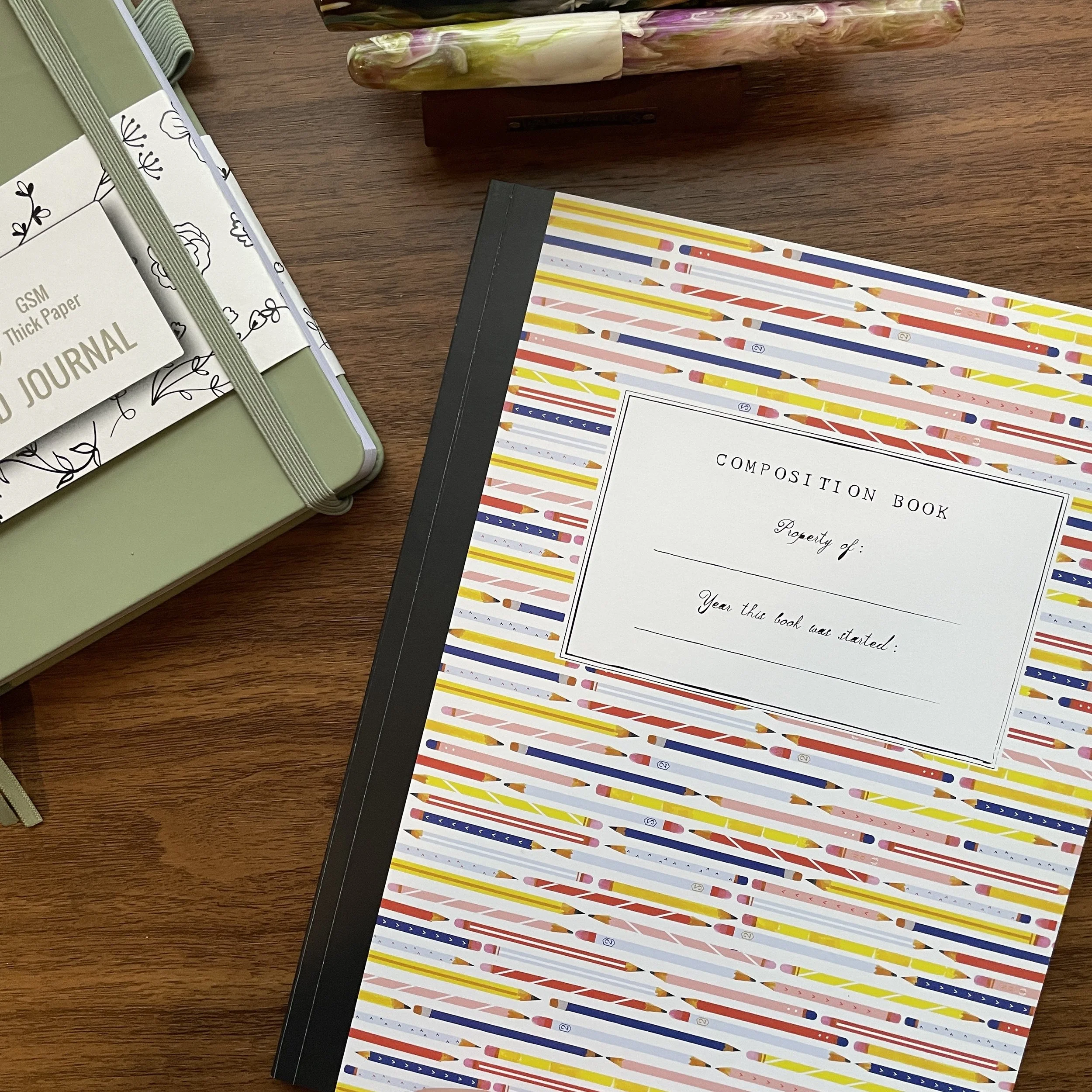
The quality of these illustrations is top-notch!

As to the composition books, I simply couldn’t pass up these cover designs, particularly the pencils, outer space, and shark patterns. The paper is traditional standard-ruled, and works well with most pens (and certainly pencils). While it is not intended for fountain pen use, extra fine/fine nibs should do ok, with some show through and pinpoint bleeding on wider nibs and wet inks. That said, these books are meant to be enjoyed for the whimsical artwork, and I’ve set aside a handful for journaling and gifting throughout the year!

The T.G.S. Curated Shop is an authorized retailer of all brands sold. Remember that all U.S. orders over $75 ship free!

In TGS Curated Shop Tags T.G.S. Curated Shop
2 Comments

Sunday Reading for January 15, 2023

January 15, 2023
  1. Waterman Expert III Fountain Pen (via Blake’s Broadcast). The Waterman Expert III is an undersung workhorse of a fountain pen, as Blake points out. You can check out my own thoughts on this particular pen here.

  2. Early Thoughts on the Otto Hutt Design 06 Fountain Pen (via Fountain Pen Blog). Another excellent workhorse pen that flies under the radar. I agree that Otto Hutt needs more consideration.

  3. Ghosts of Planners Past: Chronodex (via Writing at Large). The Chronodex planner is simple yet intricate, but it’s also one of those systems that I’ve tried and failed to use as well.

  4. A Dance with the Waldmann Tango Imagination (via Penquisition). Like Otto Hutt, I enjoy the design of Waldmann pens. I worry about the future viability of this brand in the U.S. after the steep recent price increases.

  5. PenBBS 469 Double Ended Fountain Pen (via Pen Addict - Jeff). I love my PenBBS 469 and this review is a great reminder to break it out!

  6. Journaling: Leuctturm 1917 (via A Fleeting Ripple). Leuchtturm paper seems to have fallen out of favor - or maybe it’s more accurate to say, fallen out of “focus” - in the fountain pen community in recent years. It remains a quality, budget friendly product for those who need functional paper in a workhorse format.

  7. Ode to My Art of Analytic Journaling (via mnmlscholar). While my own journaling efforts have been lackluster in recent years, I’ve remained fascinated by the efforts of others and their specific journaling techniques.

  8. Medioevalis Writing Pad Review (via Blake’s Broadcast). I’ve never heard of these pads before, but I really like the look of the brand.

  9. The Noodler’s L’Ahab Frankenpen (via Left Hook Pens). I’m amazed that this is possible.

  10. Ink of the Week - Sailor Rikyu-Cha (via Fountain Pen Love). Rikyu-Cha might make my list of inks of the decade. It’s an excellent, unique color!

In Case You Missed It….

This week on the blog I closed out my 2022 Year-End Review and 2023 Look Forward with a post on my community wishes/intentions for 2023. I also published the latest installment in the “Workhorse Pens” series, a piece on considerations when choosing a high-capacity pocket fountain pen (i.e., a “pocket ink tank”).

This Week in the Curated Shop

We introduced several new and unique products to the Curated Shop, building out our collection of curated products that are both fun and functional. This week’s additions include the Midori XS Stationery Kits in both black and white, as well as a new line of composition books from Mr. Boddington’s Studio! We’re also restocked on all things TWSBI, including the Rose Gold Pens and the TWSBI Precision Collection.

Mr. Boddington
Mr. Boddington
Gently Used
Gently Used
TWSBI Rose Gold
TWSBI Rose Gold
TWSBI Precision
TWSBI Precision

A T.G.S. Patreon Ask

This year, I’m trying to be more visible and intentional with T.G.S. Patreon and how the support/membership program will expand in 2023 to include not only access to meetups and early gently used sales, but more exclusive content, including the potential return of Digital Divide. Patreon support starts as low as $3 per month, and if you pay annually there is a further discount. In addition to purchases from The Curated Shop, Patreon allows us to continue to grow the site without relying on advertisements and affiliate marketing. If you’re interested in meetups and exclusive content, or simply supporting the site, we greatly appreciate your support!

In LInks Tags Links
Comment

Workhorse Pens: Considerations and Pitfalls of High-Capacity Pocket Fountain Pens

January 14, 2023

The Gentleman Stationer, both the blog and the shop, focuses heavily on practical pen carry, meaning pens that are not just fun to use, but can assist you in getting your work done out there in the real world. I write an ongoing series on what I call “Workhorse Pens,” and I’ve long wanted to do a separate piece on high-capacity pocket pens, which I affectionately refer to as “pocket ink tanks.” While you don’t have to carry these pens in your actual pocket, and many will prefer to carry them in a pen case, bag, or clipped to a planner, the focus is the same: compact, sturdy pens with a large ink capacity that are meant to be used on the go and which will stand up to relatively rough handling.

I’d love to see more pocket pen special releases. Opus 88 does a great job with that. TWSBI used to release semi-regular special editions of the Diamond Mini, but that’s slowed in recent years.

The term “ink tank” is pen-speak referring to a pen with a very large ink capacity, usually with a vacuum or eyedropper filling system. While I enjoy these fountain pens, and they certainly have their advantages, high-ink-capacity pens present their own set of considerations and challenges that you should be aware of before investing in one. That said, I love the ability to ink up a single pen to take on a trip or a long, all-day out-of-office writing session and not have to worry about refilling. I also know that I’m not the only one who becomes easily distracted if I have too many options with me - if I want to focus on getting real work done, I typically like to take 1-2 pens with me and use those exclusively. Ink capacity then becomes a legitimate issue, since I can easily write through 1-2 full converters of ink in a busy work day depending on what I’m doing.

From left: TWSBI Vac Mini; TWSBI Diamond Mini; and Opus 88 Pocket Mini. All three are about the same size.

Considerations When Pocket Carrying: You’ve Been Warned

  • Relative Fragility and the “Mess” Factor. Put simply, you’re carrying around a plastic tube filled with up to 4ml of liquid that stains (read: “completely destroys”) if the tube breaks. While I’ve never had a pocket fountain pen crack or leak in my pocket, it can happen, and for that reason I wouldn’t recommend carrying these pens in the same pocket or compartment with metal objects such as keys, heavy knives, etc. that could crack or damage the barrel.

  • You Can’t Avoid the Laws of Physics. If you carry a pen on your person, and especially in your pocket, body heat will raise the temperature of the ink and cause it to expand. Combine this with motion, external temperature changes, etc., and you will inevitably get some ink burping onto the nib and possibly into the cap of the fountain pen. This will be worse in pens you have “eyedroppered” yourself using o-rings or silicon grease, since there is no shutoff valve to keep ink from flowing from the main reservoir (the barrel of the pen) into the cap. Which leads me to….

  • Consider a Pen with a Shutoff Valve. Personally, the only non-cartridge converter fountain pens that I truly “pocket carry” (i.e., in my actual pants pocket) are vacuum-fillers or japanese-style eyedroppers. Each of these filling systems incorporates a shutoff valve that seals the ink reservoir off from the nib unit, reducing the risk of “inkcident”. If you want to write for an extended period of time, you simply open the shutoff valve slightly to allow the ink to flow continuously. For typical on-the-go pocket pen use, however, such as short lists or notes, you rarely have to do this, as the feed holds enough ink for 1-2 pages of writing at a time.

My Favorite Pocket “Ink Tank” Options

Given the considerations discussed above, what reasonable options exist for a high-ink-capacity, pocketable fountain pen that’s relatively low-maintenance? I alternate a few through my semi-regular rotation.

  • TWSBI Vac Mini (Top Choice). Because it uses TWSBI’s vacuum-filler system, complete with a shutoff valve, the Vac Mini is my favorite high-capacity pocket fountain pen. It’s relatively easy to fill, holds a lot of ink, and features TWSBI’s reliable stainless steel nibs. The Vac Mini is compact capped, yet it also posts by allowing you to thread the cap onto the barrel. You can read my full review of the Vac Mini here.

  • Opus 88 Pocket Mini. Those who find the design of the TWSBI Vac Mini or Diamond Mini too understated for their taste might want to check out the Opus 88 Pocket Mini fountain pen, which Opus 88 releases in several different patterns including annual holiday editions. Like most other Opus 88 fountain pens, the Pocket Mini features the Japanese-style eyedropper filling system, so it’s a bit trickier/messier to fill than either of the TWSBIs, but it does feature a safety valve. The main drawback with this pen is that it can be difficult to post - an important factor if you find these pens too short to use unposted. To post the pen with the valve open (as you would need to do to write more than a page), you have to unscrew the blind-cap ever-so-slightly. If you open it too far, there’s no place for the cap to grip the barrel and it will fall off. I will try to have a full stand-alone review of this pen at some point in the future.

  • TWSBI Diamond Mini. The TWSBI Diamond Mini is similar to the Vac Mini in that it’s a smaller version of one of TWSBI’s standard pens - in this case the TWSBI 580. Like the Vac Mini, the Diamond Mini also posts via a threaded cap/barrel connection. The difference between the two pens is filling system: the Diamond Mini features the Diamond 580’s piston-filler, and while it doesn’t have a shutoff valve, a piston typically works better for pocket carry than a standard eyedropper. (I’m not sure of the technical reasons behind this; I’m speaking solely from personal experience.) I do wish that TWSBI would start releasing both the Vac Mini and Diamond Mini in more special edition colors. You can read my full review of the TWSBI Diamond Mini here.

Three pocket pens, three different nib units, though they all write well, and for the most part, write relatively similar to one another.

Takeaways and Final Thoughts

Personally, given the logistics of carrying around a full 2-4ml vial of ink in my pocket, I’m cautious about what fountain pens I choose to pocket carry. I generally limit myself to sturdier pens such as the three featured here, and opt for pens with shut-off valves like the TWSBI Vac Mini and the Opus 88 Pocket Mini if it’s warm outside or I’m going to be especially active. The TWSBI Diamond Mini is a perfectly functional choice as well. With any of these, you get “all day” (or “all week”) writing capability if you’re looking to work outside your house or office, and all three can be purchase for well under $100, representing good value. As a bonus, all three feature interchangeable nib units specific to these pens, so you can purchase different nib sizes or swap in specialty ground nibs to change up your writing experience. You can’t really go wrong with any of the three options, it comes down to personal preference.

The T.G.S. Curated Shop is an authorized retailer of TWSBI products, including the two pens featured here. While we also sell select Opus 88 pens, we do not currently stock the Pocket Mini, and instead would refer you to our friends at Vanness Pens. This post does not contain paid affiliate links or paid advertising.

In Workhorse Pens Series, Editorial Tags Editorial, Workhorse Pens
2 Comments
← Newer Posts Older Posts →
Store Hours and Events
Shop T.G.S. Online
Updated 2026 "Best Pens" Guide
No results found
On The Paper Trail: Live In Nashville Event Tickets Now Available!
TGS_25 Roterfaden Restock Notification
Hierarchies of Fountain Pen Friendly Paper

Join Our Patreon!
Subscribe to the TGS E-mail List

Featured Posts

Featured
10-Fountain-Pens-Favorite-Inks
August 22, 2026
Three Keeper Inks: Choosing Inks for 10 Fountain Pens
August 22, 2026
Read more →
August 22, 2026
Everyday-Stationery-Bags
July 25, 2026
What's the Best Everyday Stationery Bag? My Own Considerations and 5 Options for Pen Show Season
July 25, 2026
Read more →
July 25, 2026
Graphilo-Kobeha-Paper.jpg
July 11, 2026
Paper Review: Graphilo by Kobeha
July 11, 2026
Read more →
July 11, 2026
The Gentleman Stationer RSS

View Cart

© Digital Divide Media, LLC, 2014-present.

All content is the exclusive property of Digital Divide Media, LLC, d/b/a The Gentleman Stationer, including “The Gentleman Stationer” website and trademark, and should not be reproduced without express written permission.  All rights reserved.

All content containing paid advertising, affiliate links, or sponsored content will be plainly disclosed by a disclaimer when/if featured.

Contact Information

Website Terms and Conditions

Store Shipping Policy and Return Policy

Privacy Policy and Cookie Policy

Accessibility Statement

Powered by Squarespace